
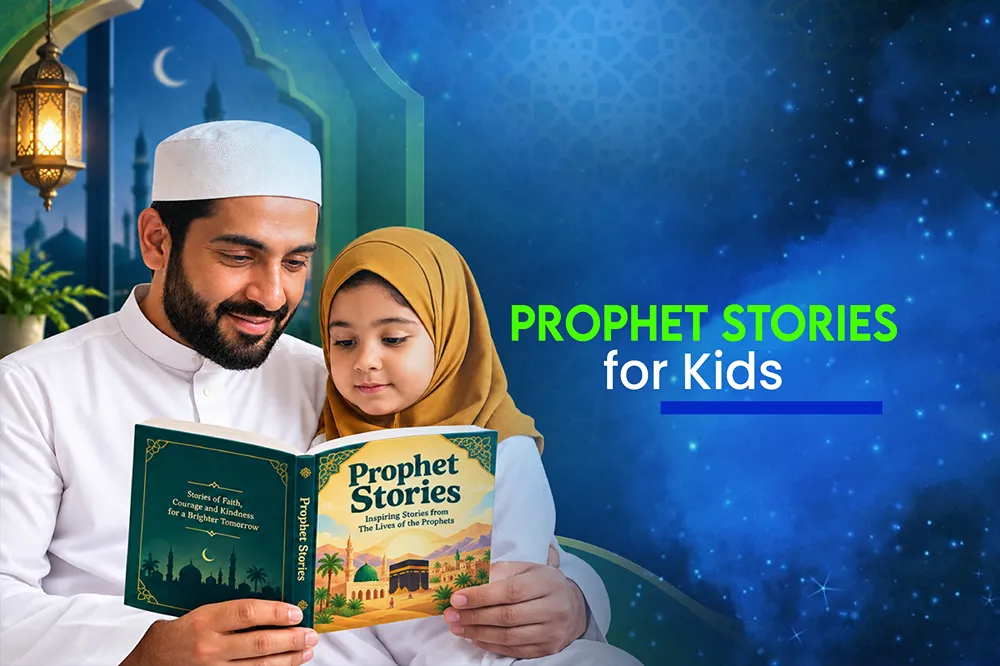
Children love stories. A good story can hold their attention, teach them right from wrong, and stay in their memory for years. This is exactly why Prophet Stories for Kids are such a powerful way to introduce children to the Quran. These stories are not just old tales. They carry real lessons about honesty, patience, kindness, and trust in God.
Many parents want to raise children with strong Islamic values, but they often ask the same question. How do I make the Quran interesting for a child who would rather watch cartoons? The answer is simple. Turn the Quran into stories your child actually wants to hear.
In this guide, you will learn why Prophet Stories for Kids matter, the best stories to start with, and simple methods to make storytelling from the Quran fun, memorable, and meaningful for your child. You will also find practical tips, a checklist, and common mistakes to avoid so that storytelling becomes a habit your family looks forward to rather than a chore.
Many families report that faith based storytelling at home leads to calmer bedtimes and more open conversations with children about right and wrong. While every family is different, the pattern is clear across Islamic parenting communities. Stories work where lectures fail, and Prophet Stories for Kids remain one of the most trusted tools for early Islamic education.
Why Prophet Stories for Kids Matter in Islamic Learning
Every child needs role models. Before children can understand deep religious concepts, they connect best with people and their journeys. Prophet Stories for Kids give children real examples of courage, patience, and faith through people they can imagine and admire.
The Quran itself uses storytelling as a teaching method. Many chapters describe the lives of prophets, their struggles, and how they trusted God through hard times. When you share these stories with your child, you are following the same method the Quran uses to teach adults and children alike.
How Prophet Stories for Kids Connect Children to the Quran
When a child hears the story of Prophet Nuh building a boat, or Prophet Musa standing up to a powerful ruler, they begin to see the Quran as something alive and exciting rather than a book of rules. This connection is important because it builds a habit of curiosity. A child who enjoys Prophet Stories for Kids is more likely to grow up wanting to read and understand the Quran on their own.

Storytelling also builds emotional connection. Children remember how a story made them feel long after they forget the details. A story about Prophet Yusuf forgiving his brothers can teach forgiveness better than any lecture ever could.
There is also a wider benefit for the whole family. When parents take time to sit with their children and tell Prophet Stories for Kids, it becomes a shared ritual rather than a one sided lesson. Children look forward to it, ask for it by name, and often remind parents when it is time for the next story. This kind of gentle consistency is often more effective than formal classroom teaching alone, especially for children under the age of eight.
Benefits of Teaching Quran Stories to Children
Teaching Quran stories to your child brings benefits that go far beyond religious knowledge. Here are some of the most important ones.
- Builds strong character: Children learn honesty, patience, and kindness through real examples.
- Improves listening and language skills: Storytelling naturally builds vocabulary and attention span.
- Strengthens family bonding: Reading or telling stories together creates quality time between parent and child.
- Creates a habit of learning: Children who enjoy stories are more open to learning Quran recitation and meaning later.
- Reduces screen time: Storytelling gives children an enjoyable alternative to phones and tablets.
Building Strong Moral Values Through Prophet Stories for Kids
Each prophet mentioned in the Quran faced a different kind of test. Prophet Ayyub taught patience through illness. Prophet Ibrahim taught trust in God through sacrifice. Prophet Yunus taught the importance of turning back to God after a mistake. When children hear these stories again and again, the values inside them slowly become part of how the child thinks and behaves.
Quran Lessons Children Remember for Life
A child may forget a rule taught to them directly, but they rarely forget a story. This is why Prophet Stories for Kids are such an effective teaching tool. The lesson stays wrapped inside a memory, and children often bring these stories back into conversation years later, applying the lesson without even realizing it.
Teachers who work in Islamic schools often notice that children recall the actions of a prophet long before they recall a rule written in a textbook. A child may not remember the exact meaning of patience as a word, but they will remember how Prophet Ayyub stayed patient during illness, and they will use that memory the next time they feel like giving up on something difficult. This is the quiet power of storytelling. It teaches without the child feeling taught.
Best Prophet Stories for Kids from the Quran
If you are just starting out, here are some of the best Prophet Stories for Kids to introduce first. Each one carries a clear lesson that is easy for a young mind to grasp.
The Story of Prophet Adam for Kids
Prophet Adam was the first human created by God. Children enjoy learning how God taught Adam the names of things and how angels were asked to respect him. This story teaches children about human value, obedience, and how mistakes can be forgiven when we turn back to God with sincerity.
When telling this story, focus on the idea that every person is special and valuable. Children respond well to the part where Adam is given knowledge that even the angels did not have. It helps them understand that learning is a gift, and that God values effort and honesty even after a mistake is made.
The Story of Prophet Nuh for Kids
Prophet Nuh spent many years calling people to worship one God. Only a few believed him. He built a large boat as instructed by God, and those who believed were saved from a great flood. This story teaches patience and the importance of staying firm even when others do not listen.
Children are usually amazed by how long Prophet Nuh kept trying even when people laughed at him. This detail alone can spark a great conversation about not giving up, even when a task feels slow or when friends do not support a good decision.
The Story of Prophet Ibrahim for Kids
Prophet Ibrahim questioned the false idols his people worshipped and stood firm in his belief in one God, even when he was thrown into a fire. Children learn about courage, standing up for the truth, and trusting that God protects those who are sincere.
This is a favorite among older children because it feels bold and brave. Use it to talk about honesty even when it feels scary, such as telling the truth about a broken toy or admitting a mistake at school.
The Story of Prophet Musa for Kids
Prophet Musa grew up in a palace and later stood against a cruel ruler to free his people. The story includes exciting moments such as the parting of the sea. Kids love the adventure in this story, while learning about justice and standing against unfair treatment.
Many children ask questions about the staff turning into a snake or the sea splitting open, and that curiosity is a good thing. Let your child ask freely, and use the moment to explain that God supports those who stand for what is right, even when the odds seem impossible.
The Story of Prophet Yusuf for Kids
Prophet Yusuf was treated badly by his own brothers but rose to a position of honor through patience and good character. Years later, he forgave them with kindness. This is one of the most loved Prophet Stories for Kids because it combines adventure with a powerful lesson on forgiveness.
Children with siblings often connect deeply with this story since it deals directly with jealousy and family conflict. Use it gently to talk about how to treat brothers and sisters fairly, and how forgiveness often feels better than holding onto anger.
The Story of Prophet Muhammad for Kids
The final Prophet Muhammad, showed mercy, honesty, and kindness even to people who treated him badly. Simple stories from his childhood and early life work well for young children, such as his honesty in trade and his gentle behavior toward animals and the poor.
Small daily habits such as smiling at others, speaking kindly, and caring for animals can all be traced back to simple stories from his life. These small, relatable moments often mean more to a young child than larger, more dramatic events, since they can copy them the very same day.
Step by Step Guide to Teaching Prophet Stories for Kids
Teaching these stories does not require special training. Follow these simple steps to get started.
Step 1: Pick one story at a time: Do not rush through many stories in one sitting.
Step 2: Set a regular time: Bedtime or after dinner works well for most families.
Step 3: Use simple words: Avoid complex terms that a young child may not understand.
Step 4: Ask questions: After the story, ask your child what they think happened and why.
Step 5: Repeat favorite stories: Repetition helps children remember the lesson.
Step 6: Connect the story to daily life: Point out moments when your child can apply the lesson.
Simple Ways to Explain Quran Stories to Young Children
Use short sentences. Speak slowly. Use your voice and facial expressions to show emotion in the story. You can also use drawings, toy figures, or simple props to act out parts of the story. Young children learn best through their senses, so the more interactive the storytelling, the better they remember it.
Best Practices for Storytelling from the Quran
Good storytelling habits make a big difference in how well children absorb the message. Keep these practices in mind.
- Keep the story age appropriate and avoid frightening details.
- Focus on the lesson rather than every historical detail.
- Use a calm and warm tone of voice.
- Let your child ask questions during the story.
- End with a clear takeaway the child can remember in one sentence.
Common Mistakes Parents Make When Teaching Prophet Stories for Kids
Even well meaning parents sometimes make small mistakes that reduce how effective the storytelling becomes.
- Rushing through the story: Children need time to absorb what they hear.
- Adding too much detail at once: This can confuse or bore a young child.
- Turning the story into a lecture: Long explanations often lose a child’s attention.
- Skipping the emotional side of the story: Facts alone do not stick as well as feelings do.
- Only telling stories once: Without repetition, children forget the lesson quickly.
Expert Tips for Making Quran Stories Fun and Memorable
Islamic educators often recommend combining storytelling with activity. Try drawing the story afterward, acting it out with siblings, or asking your child to retell it in their own words the next day. This turns passive listening into active learning, which helps the story stay in memory much longer.
Another helpful tip is to link the story to a current event in your child’s life. If your child is dealing with a disagreement with a friend, the story of Prophet Yusuf forgiving his brothers becomes a natural and meaningful lesson at that exact moment.
Consider keeping a small notebook of your child’s favorite Prophet Stories for Kids along with the questions they asked. This helps you notice which lessons stick and which stories need to be retold. Over months, this simple notebook becomes a record of your child’s growing understanding of the Quran and its values.
It also helps to involve grandparents or older relatives in storytelling sessions when possible. Hearing the same Prophet stories from a grandparent adds warmth and a sense of tradition, and children often enjoy comparing how different family members tell the same story in their own way.
Using Quran Janan and Other Tools to Support Learning
Many parents today use apps and digital tools to support Quran learning alongside storytelling at home. Platforms such as Quran Janan are designed to help children engage with the Quran in a structured and guided way, making it easier for busy parents to build a consistent learning routine alongside bedtime stories. Combining a tool like Quran Janan with regular storytelling at home gives children both structure and warmth in their learning journey.
Digital tools work best when they support family time rather than replace it. A guided platform can help with recitation and memorization, while parents remain the main storytellers for Prophet Stories for Kids at home. This balance keeps the learning personal while still giving children access to structured Quran education whenever needed.
It is worth noting that no single method works the same for every child. Some children respond better to spoken storytelling, while others enjoy following along with a guided app or book. Trying a mix of methods, including tools like Quran Janan, storybooks, and simple verbal storytelling, gives your child the best chance of forming a lasting bond with the Quran.
Advantages of Regular Prophet Storytelling at Home
Families who make Prophet Stories for Kids a regular habit often notice benefits beyond religious knowledge alone. Children tend to sleep better after a calm story instead of screen time, and parents find that bedtime becomes a moment of connection rather than a struggle. Siblings who hear the same stories together also develop a shared language of values, often reminding each other about a lesson from a story when conflicts come up during the day.
There are very few downsides to this practice, though it is worth being mindful of a child’s age and emotional readiness. Some stories involve difficult events, such as hardship or loss, and these should be softened for very young children while still keeping the core lesson intact. As children grow older, more of the original detail can be added back into the storytelling.
Checklist for Parents Teaching Prophet Stories for Kids
Use this simple checklist to stay consistent.
- Choose one Prophet story for the week
- Set a fixed storytelling time each day
- Use simple language suited to your child’s age
- Ask at least one question after the story
- Repeat the story again later in the week
- Connect the lesson to something your child experienced that day
- Celebrate when your child remembers or applies the lesson
Summary
Prophet Stories for Kids are one of the most natural and effective ways to introduce children to the Quran. By choosing simple stories, telling them regularly, and connecting the lessons to daily life, parents can help their children build strong moral character rooted in faith. Tools such as Quran Janan can support this journey by adding structure to Quran learning at home.
Conclusion
Teaching your child about Islam does not need to feel like a difficult task. Prophet Stories for Kids give you an easy and enjoyable starting point that both you and your child will look forward to. Start with one story tonight, keep it simple, and watch how quickly your child begins to ask for more. Over time, these small storytelling moments build a strong and lasting connection between your child and the Quran.
Frequently Asked Questions
1. What are Prophet Stories for Kids?
Prophet Stories for Kids are simplified versions of the stories of prophets mentioned in the Quran, told in a way that young children can easily understand and enjoy.
2. Why should I teach my child Prophet Stories for Kids?
These stories teach important values such as honesty, patience, and kindness, while helping children build a personal connection with the Quran from an early age.
3. What age is best to start Prophet Stories for Kids?
Children as young as three or four can begin enjoying simple versions of these stories, with more detail added as they grow older.
4. Which Prophet story should I start with?
Many parents begin with the story of Prophet Yusuf or Prophet Nuh, since both stories are engaging and carry clear, easy to understand lessons.
5. How long should each storytelling session be?
Ten to fifteen minutes is usually enough for young children to stay focused and enjoy the story fully.
6. Can Prophet Stories for Kids be told without reading the Quran directly? Yes, parents can tell the stories in their own simple words, though it helps to review the Quranic account first to keep the details accurate.
7. How can I make Quran stories more interesting for my child?
Use expressive tone, simple props, drawings, or role play to bring the story to life instead of only reading it aloud.
8. Are there apps that help with teaching Quran stories?
Yes, platforms such as Quran Janan offer structured Quran learning that can work alongside storytelling at home.
9. How often should I repeat the same Prophet story?
Repeating a story every few weeks helps children remember the lesson and often reveals new details they missed the first time.
10. What is the main goal of teaching Prophet Stories for Kids?
The main goal is to help children build good character and a loving connection with the Quran through stories they enjoy and remember.


