
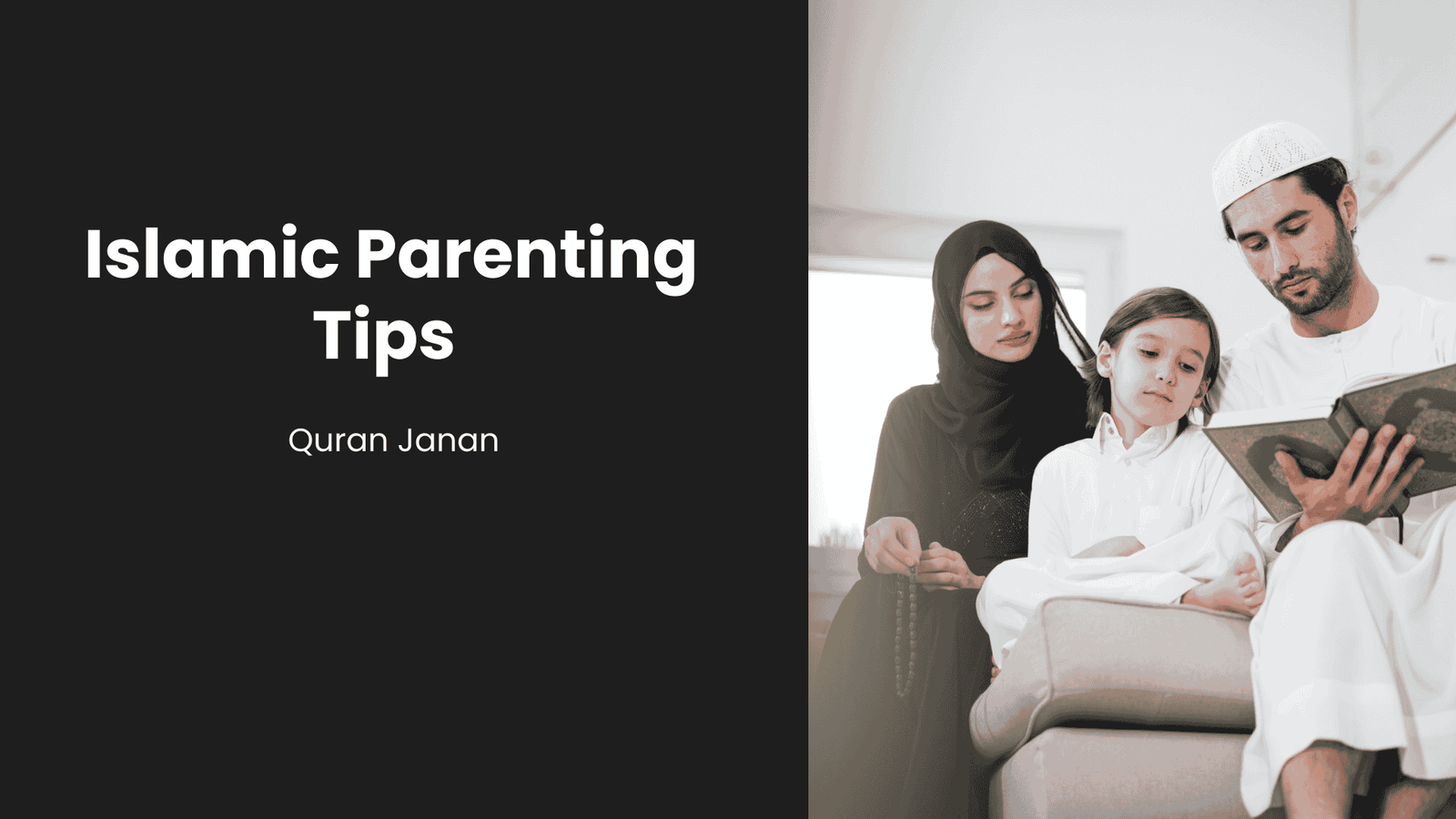
Islamic Parenting Tips focus on raising children with strong faith, good character, and love for the Quran. In Islam, children are an amanah (trust), and parents are responsible for their tarbiyah. The Quran in Surah At-Tahrim (66:6) commands believers to protect their families from Hellfire. Prophet Muhammad (peace be upon him) emphasized responsibility in parenting. Teaching Salah, Quran with Tajweed, good manners, and Islamic values from an early age builds righteous and successful Muslim children.
Islamic Parenting Tips – The Best Principles of Islamic Education
In today’s era, raising children with strong Islamic values has become one of the greatest challenges for parents. Social media, negative influences, and worldly distractions make it difficult to keep children connected to their faith. That is why every Muslim parent needs practical and authentic Islamic Parenting Tips to help their children succeed in both this world and the hereafter.
In Islam, children are an amanah (trust). Parents will be questioned about how they raised and educated them.
The Prophet Muhammad (peace be upon him) said that each of you is a shepherd and each of you will be questioned about his responsibility.
1. Start With Your Own Self-Reform
The foundation of Islamic parenting begins with the parents.
Children learn more from what they see than what they hear.
Parents should focus on:
-
Establishing regular prayer
-
Speaking truthfully
-
Distinguishing between halal and haram
-
Reciting the Quran at home
-
Showing good character in daily life
If parents practice Islam sincerely, children naturally follow.
2. Strengthen the Child’s Relationship With the Quran
The strongest Islamic foundation is the Qur’an.
Allah Almighty says:
“O you who believe, protect yourselves and your families from a Fire.”
— Surah At-Tahrim (66:6)
This verse clearly shows that protecting our families spiritually is a duty.
Practical steps:
-
Make daily Quran recitation a routine
-
Teach proper recitation with Tajweed
-
Explain simple meanings according to their age
-
Encourage love for the Quran instead of pressure
A child connected to the Quran develops strong faith and character.
3. Train With Love and Gentleness
The Prophet Muhammad (peace be upon him) was extremely gentle with children.
Effective parenting includes:
-
Explaining instead of shouting
-
Listening carefully
-
Praising good behavior
-
Encouraging improvement
-
Correcting mistakes calmly
Harshness hardens hearts, but love builds connection.
4. Build the Habit of Salah From Childhood
Prayer builds discipline and spiritual awareness.
Parents should:
-
Encourage prayer from the age of seven
-
Pray themselves consistently
-
Occasionally pray in congregation at home
-
Make prayer enjoyable and meaningful
Children should see Salah as peace, not punishment.
5. Teach Daily Duas and Adhkar
Small daily supplications create lifelong protection.
Teach children:
-
Dua before sleeping
-
Dua before leaving home
-
Dua before eating
-
Morning and evening Adhkar
These simple habits protect them spiritually and strengthen their connection with Allah.
6. Control Mobile and Screen Time
Balanced Islamic parenting includes digital discipline.
Parents should:
-
Limit unnecessary social media use
-
Monitor online content
-
Choose beneficial Islamic programs
-
Increase family discussion time
Technology should support learning, not replace family bonding.
7. Provide a Positive Environment
Environment shapes character.
Parents should ensure:
-
Good friends
-
Islamic surroundings
-
Attendance at beneficial gatherings
-
Exposure to righteous role models
Good company strengthens faith and manners.
8. Practice Patience and Consistency
Islamic tarbiyah (training) does not produce instant results.
Parents must:
-
Be patient
-
Avoid unrealistic expectations
-
Make constant dua for their children
-
Continue guiding consistently
The advice of Luqman to his son, mentioned in Surah Luqman in the Qur’an, provides timeless principles of faith, humility, and character building.
Signs of Successful Islamic Parenting
When Islamic parenting is effective, children:
-
Stay connected to religion
-
Speak truthfully
-
Respect elders
-
Love prayer and Quran
-
Develop taqwa (God-consciousness)
These qualities reflect strong Islamic upbringing.

Quran Janan – Building a Strong Islamic Foundation for Children
If you want:
-
Your children to learn Quran with proper Tajweed
-
Memorization of authentic Duas and Adhkar
-
Proper Salah training
-
A religious environment at home
Quran Janan provides structured Islamic education for children of all ages.
We Offer:
-
One-on-One Online Quran Classes
-
Kids Quran Foundation Course
-
Tajweed & Memorization Program
-
Islamic Manners & Duas Training
-
Qualified Male & Female Teachers
Secure Your Children’s Future Today
Following authentic Islamic Parenting Tips helps children succeed both spiritually and socially.
The best gift you can give your children is strong Islamic training.
Book your free trial class at Quran Janan today and help your children build a lifelong connection with the Quran and Islamic values.
May Allah make our children righteous, obedient, and firmly connected to their faith. Ameen.
FAQs – Islamic Parenting & Modern Parenting Rules
1️⃣ What is the 7-7-7 rule of parenting in Islam?
The 7-7-7 rule in Islamic parenting is based on a famous saying attributed to Ali ibn Abi Talib:
-
First 7 years (0–7): Treat the child like a king – show love, play, build attachment.
-
Next 7 years (7–14): Teach discipline, manners, prayer, and responsibility.
-
Last 7 years (14–21): Treat them like a friend – guide with wisdom, not force.
This model balances love, structure, and friendship.
2️⃣ What is the 7-7-7 rule of parenting?
In general parenting psychology, it follows the same three phases:
-
0–7: Emotional bonding
-
7–14: Training and boundaries
-
14–21: Mentorship and trust
It emphasizes age-appropriate parenting rather than strict control.
3️⃣ What is the Islamic parenting style?
Islamic parenting is built on:
-
Mercy and compassion
-
Teaching Tawheed and faith
-
Leading by example
-
Balanced discipline
-
Respect and kindness
The Prophet Muhammad ﷺ showed gentleness toward children, played with them, and corrected with wisdom.
Core principles include love, patience, dua, and tarbiyah (character building).
4️⃣ How to love a difficult child?
To love a difficult child:
-
Separate the behavior from the child
-
Respond calmly, not emotionally
-
Increase one-on-one time
-
Make dua for them
-
Praise small improvements
Often “difficult” behavior hides emotional needs.
5️⃣ What is the hardest age for a child to parent?
This varies, but many parents find:
-
Toddler years (2–4): Tantrums and emotional regulation
-
Teen years (13–18): Identity struggles and independence
Every stage has challenges, but consistency helps.
6️⃣ How to discipline a child that won’t listen?
Effective discipline includes:
-
Clear rules and consistent consequences
-
Eye contact and calm tone
-
Limiting repeated warnings
-
Natural consequences
-
Positive reinforcement
In Islam, discipline must never involve humiliation or injustice.
7️⃣ What are the 5 C’s of parenting?
The 5 C’s commonly include:
-
Connection
-
Consistency
-
Compassion
-
Communication
-
Confidence-building
These principles build emotionally secure children.
8️⃣ What is the 3-3-3 rule for kids?
The 3-3-3 rule is often used to help anxious children:
-
Name 3 things you see
-
Name 3 things you hear
-
Move 3 body parts
It helps calm anxiety and bring focus to the present moment.


