
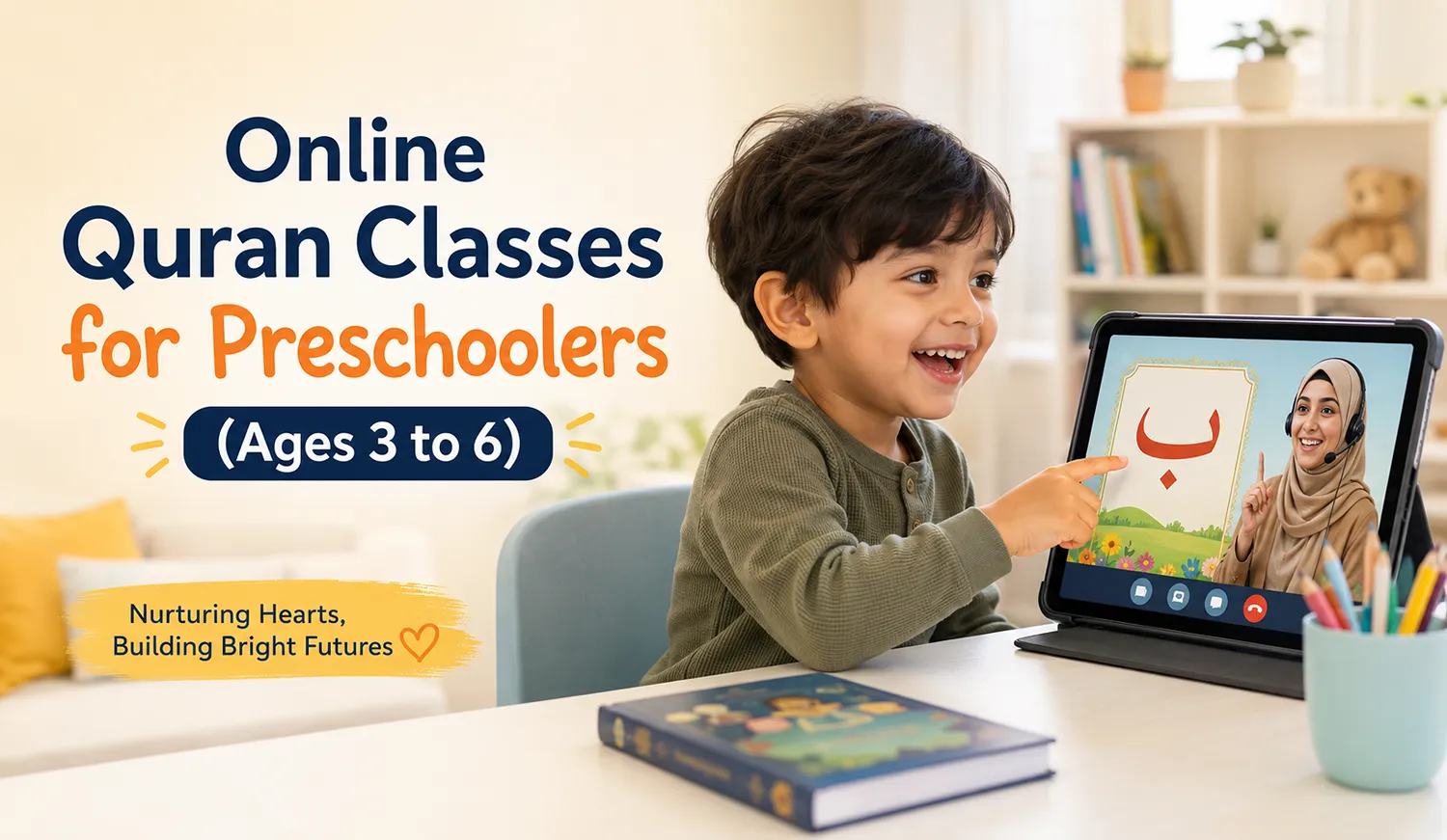
Three seems young to start anything formal, and in one sense it is. A preschooler cannot sit still for a proper lesson, and pushing them will only build resistance. But early childhood is also when sounds are absorbed most easily, which makes it a wonderful time to plant gentle seeds, as long as the approach is play, not pressure.
Online Quran classes for preschoolers are short, playful lessons of 10 to 15 minutes that introduce Arabic letters, sounds, and a few short surahs through repetition and fun. The goal at ages 3 to 6 is love and familiarity, not mastery. Patient one-on-one teachers keep it light, and a parent stays nearby throughout.
What can preschoolers actually learn?
Set expectations gently. A three-year-old is not going to read, and that is fine. What they can do is soak up the sounds of Arabic letters, echo short surahs, and build a warm association with the Quran that lasts a lifetime. The early goal is feeling, not fluency.
Young children learn through repetition and imitation, which suits Quran learning beautifully. Hearing and copying a teacher is exactly how recitation has always been passed on. Our best online Quran classes for kids adapt this for the youngest learners, and our Arabic alphabet beginners guide shows the very first sounds they meet.
Keep it short and playful
The single rule for this age is short. Ten to fifteen minutes is plenty. A preschooler’s focus is measured in minutes, and a lesson that ends while they are still enjoying it leaves them wanting more. Drag it out and you teach them to dread it.
Playfulness matters just as much. Songs, repetition games, colourful letters, and lots of praise keep a small child engaged. Our fun ways to teach Islam to kids and tips to motivate children to learn the Quran are full of gentle, age-appropriate ideas.
The parent’s role at this age
For preschoolers, you are part of the lesson, not just a supervisor. Sitting beside your child, joining in the sounds, and celebrating their tries turns the screen into a shared, safe space. Your presence is what makes a small child comfortable enough to engage.
Keep the device in a shared room and stay within reach. Our guide on the role of parents in learning the Quran and our Islamic parenting tips show how to support without pressure. Early habits shaped now carry into the school years, as our piece on why kids should start learning Quran early explains.

A gentle preschool learning path (Online Quran Classes for Preschoolers )
There is a natural order for the youngest learners. It moves slowly and repeats often, which is exactly right for this age.
- Familiar sounds. The child hears and copies Arabic letter sounds through play and song.
- Recognising letters. They start to point out letters by shape and sound.
- Short surahs by ear. They echo very short surahs, building them up line by line.
- First joining. Only when ready, they begin linking simple sounds, often near age six.
There is no rush through these steps. Some children move faster, some slower, and both are perfectly normal. When your child is ready for structured reading, the Noorani Qaida method picks up naturally from here.
Building a gentle daily rhythm
Little and often is the golden rule for this age. A preschooler learns far more from five minutes most days than from a single long session once a week. Short, regular contact keeps the sounds fresh and the association warm.
Attach the lesson to an existing part of the day, so it feels natural rather than imposed. Right after breakfast, or a quiet moment before an afternoon nap, works well for many families. Keep the same gentle time each day, and the habit forms almost on its own. Our guide on how to make Quran your daily habit has simple ways to anchor a routine for the youngest learners.
Between lessons, weave the Quran lightly into daily life. Play a short recitation while tidying up, or repeat a familiar surah together in the car. This casual exposure does quiet, powerful work, surrounding your child with the sounds they are learning without any pressure at all. Our best Quran learning routine for the whole family shows how to fold it gently into the day.
Why online suits young children
Parents sometimes assume a small child cannot learn over a screen. In practice, one-on-one online lessons suit preschoolers well. The child stays in a familiar home, a parent is right there, and the teacher gives full attention to one small person rather than managing a room full of toddlers.
The short, private format also means the lesson bends entirely to your child’s mood and energy on the day. Our one-to-one online Quran classes and online Quran classes for kids are built around this flexibility. Learning the Quran early builds a foundation of faith and character, a purpose at the heart of the text described in this Encyclopaedia Britannica entry on the Quran.
Signs your preschooler is ready
There is no fixed age within the 3 to 6 window, since children develop differently. A few gentle signs tell you your child is ready to begin, and none of them involve sitting still for long.
Can your child copy simple sounds you make? Do they enjoy songs and repetition? Can they focus on a picture book or a short activity for even five minutes? Do they show curiosity about letters or writing? If so, they are ready for short, playful lessons. Readiness here is about willingness and warmth, not academic skill.
If your child is not quite there, that is fine too. A short trial will show you either way, with no pressure to continue. Our overview of why kids should start learning Quran early explains how early exposure helps, even when formal reading comes later.
What to avoid at this age
The fastest way to put a small child off is to push too hard. A few things are worth avoiding entirely, because they teach a preschooler to dread the very thing you want them to love.
Do not force a distracted child to continue a lesson. End it early and try again tomorrow. Do not aim for reading before your child is ready, since pressure at this age backfires. Do not compare your child to others, and do not let lessons run long. Ten to fifteen happy minutes beat thirty tearful ones every time. Keep it warm, short, and playful, and let progress come at its own pace. Our fun ways to teach Islam to kids and tips to motivate children to learn the Quran keep the mood right.
Book a gentle free trial
The best way to see if your preschooler is ready is a short, no-pressure trial. You will see how they respond to a patient teacher and whether the playful format holds their attention, all with you right beside them.
Message Quran Janan Online Academy on WhatsApp at +92 333 2515313, or register through our free trial online Quran class page. Tell us your child’s age, and we will match a gentle teacher for a short, playful trial lesson.
Frequently asked questions
Can preschoolers really learn the Quran online?
Yes, in a gentle way. Children aged 3 to 6 can absorb Arabic letter sounds and echo short surahs through short, playful lessons. The goal at this age is familiarity and love, not mastery.
How long should a preschooler’s lesson be?
Ten to fifteen minutes is ideal. Young children have short attention spans, so a brief lesson that ends while they are still enjoying it keeps them eager to return.
Does a parent need to be present?
Yes, ideally beside the child. At this age, the parent is part of the lesson, joining in sounds and celebrating tries, which makes a small child comfortable enough to engage.
What will my preschooler actually learn? (Online Quran Classes for Preschoolers )
They will build familiarity with Arabic letter sounds, start recognising letters, and echo very short surahs by ear. Structured reading usually begins later, around age six when they are ready.
Is online better than in-person for this age?
Often, yes. One-on-one online lessons keep the child in a familiar home with a parent nearby, and the teacher gives full attention to one child rather than managing a group of toddlers.
How do I know if my child is ready to start?
A short free trial is the best test. You will see whether a patient teacher can hold your child’s attention and whether the playful format suits them, with no pressure to continue.


