
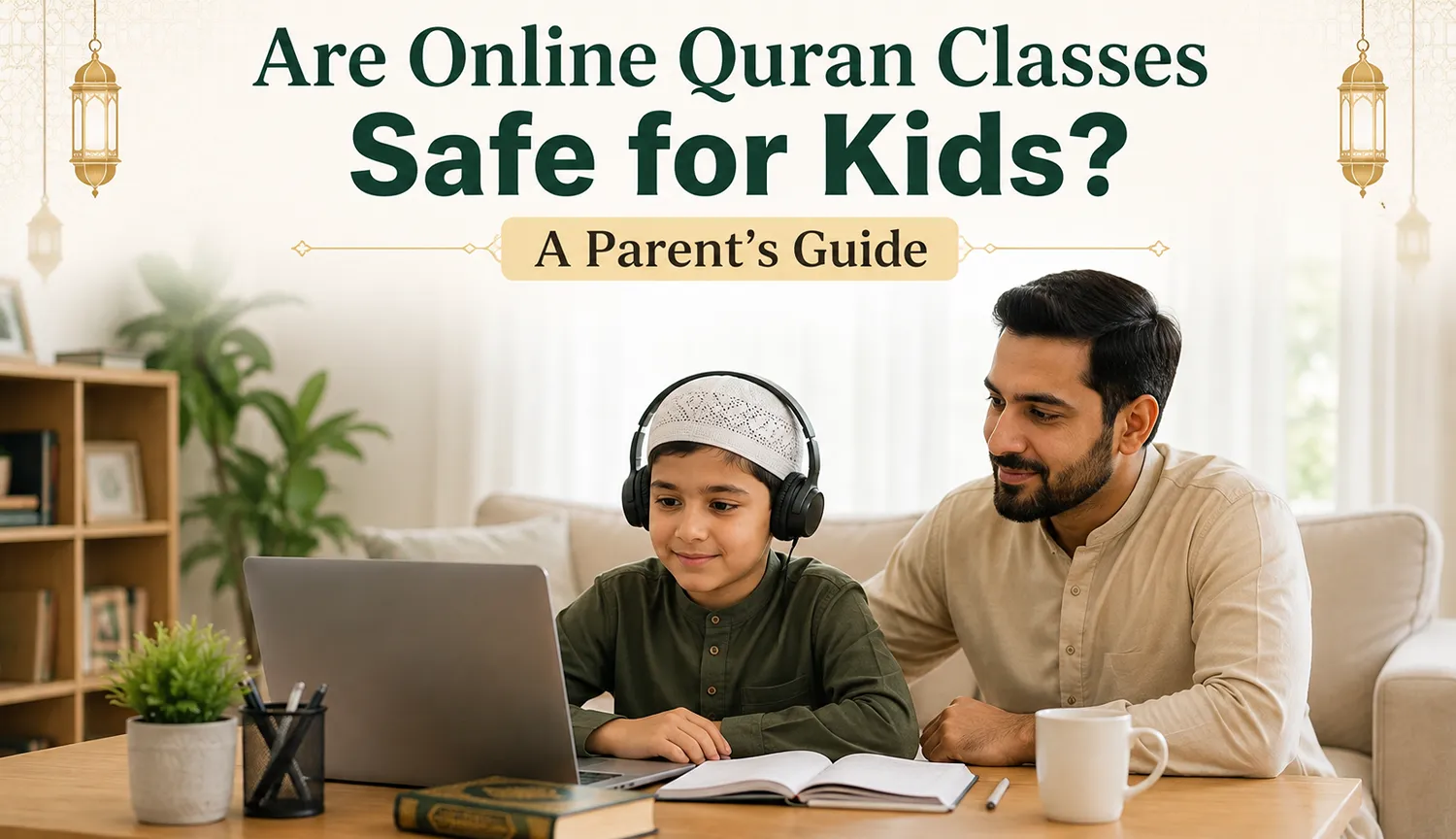
Any parent putting a child in front of a screen to learn asks the same thing first: is this actually safe? It is a fair question, and a good academy will welcome it rather than brush it off. Online Quran learning can be very safe, but the safety comes from how the classes are set up, not from luck.
Online Quran classes are safe for kids when the academy uses verified teachers, keeps lessons one-on-one, lets parents watch or record, and runs on a secure video platform. The risk is not the format itself but poor safeguarding. Choosing a reputable academy and staying nearby during lessons keeps your child protected.
What “safe” really means for online lessons
Safety here has two sides. There is the technical side, which is about the platform, passwords, and privacy. And there is the human side, which is about who the teacher is and how they behave. Both matter, and a serious academy handles both openly.
On the human side, ask whether teachers are verified and trained, and whether female teachers are available for daughters. Our online Quran classes for women with a female teacher and our fully female sisters-only Quran classes online exist so families can keep the setting comfortable and appropriate.
On the technical side, a good provider uses a private link, a waiting room the teacher controls, and no public class where strangers can join. That structure is what makes our one-to-one online Quran classes contained and predictable.
Why one-on-one is safer than group
A private lesson is inherently easier to keep safe than a large open class. There is one teacher and one child; the parent knows exactly who is on the call, and nothing unexpected wanders in from a crowd of strangers. You control the whole environment.
Group classes can still be run safely, but they add variables. In a one-on-one setting, you can sit in the room, listen, and step in instantly if anything feels off. That direct oversight is the strongest safeguard there is, and it is a core reason many parents prefer private online Quran classes for kids.
A safety checklist before you enrol
Run through these before your child’s first paid lesson. If an academy cannot answer them clearly, treat that as a warning sign.
- Verified teachers. Ask how teachers are vetted and what qualifications they hold.
- Female teacher option. Confirm this is available if you want it for a daughter.
- Parent access. Check that you can watch, sit in, or record lessons.
- Private platform. Make sure lessons use a secure, password-protected link, not an open room.
- Clear contact.A real phone or WhatsApp number and a real address signal a genuine organisation.
- Free trial. A no-pressure trial lets you judge the teacher before committing.
Our contact details are public for exactly this reason. Quran Janan Online Academy is based in Abbottabad, Pakistan, and you can reach a real person on WhatsApp at +92 333 2515313.

How parents can stay involved without hovering
Your presence is the best safety tool you have, and it does not mean sitting on top of your child the whole time. Being in the same room, within earshot, is enough. Children behave differently when a parent might walk past, and so does everyone else on the call.
Set the laptop up in a shared space, not a bedroom. Keep the first few lessons within view while your child settles. As trust builds, you can give more space while still checking in. Our guide on the role of parents in learning the Quran has practical ways to support without pressure, and our Islamic parenting tips go further into building a calm routine.
Keeping kids safe on the device itself
Beyond the class, basic device habits protect your child across everything they do online. Use a shared family account, keep software updated, and turn on parental controls in your browser or operating system. These take minutes to set up and cover far more than one lesson.
Teach your child two simple rules: never share personal details, and always tell a parent if anything feels strange. Small habits like these matter for every screen, not only Quran class. The point of learning the Quran, after all, is to build good character, and the text itself has been carefully preserved and taught for centuries, as this Encyclopaedia Britannica entry on the Quran describes.
Does online learning affect how well kids learn?
Safety and quality go together, so it is worth saying: supervised online lessons teach children very well. A patient teacher, a private session, and a parent nearby often produce better focus than a crowded in-person class. Younger children in particular respond to the one-on-one attention.
If you want to see how the teaching itself is structured, our best online Quran classes for kids overview and the beginner-friendly Noorani Qaida method show the path from first letters to fluent reading. For encouraging a reluctant child, our tips on how to motivate children to learn the Quran help.
What to do if something ever feels wrong
Trust your instincts. If a teacher behaves in a way that makes you or your child uncomfortable, you do not need a reason to act. End the lesson, step in, and raise it with the academy straight away. A genuine organisation will take any concern seriously and respond quickly.
Keep the lines of communication open with your child too. Ask them casually how lessons feel and whether they enjoy their teacher. Children often signal discomfort indirectly, through reluctance or a change in mood, so pay attention to those cues as much as to their words.
You always have the right to change teacher or pause lessons, with no obligation to explain. That freedom is part of what makes a supervised, one-on-one setup safe. Our best online Quran academy guide explains the marks of an academy that welcomes this kind of oversight rather than resisting it.
Questions worth asking the academy
A few direct questions tell you a lot about how seriously a provider takes safety. Ask them before enrolling, and judge the clarity of the answers as much as the answers themselves.
Ask how teachers are vetted, whether you can record lessons, what platform is used and how access is restricted, and whether a female teacher is available. Ask, too, who you contact if you have a concern, and how fast they respond. Quran Janan lists a real WhatsApp number and address precisely so parents always have a person to reach. Our guide on the role of parents in learning the Quran has more on staying involved.
Try a free, supervised trial
The best way to judge safety is to watch one lesson yourself. Sit beside your child, see how the teacher speaks to them, and check that the platform and timing suit your family. You will know within one session whether it feels right.
Message Quran Janan Online Academy on WhatsApp at +92 333 2515313, or register through our free trial online Quran class page. Tell us your child’s age and whether you want a female teacher, and we will arrange a supervised trial you can sit in on.
Frequently asked questions
Are online Quran classes safe for young children?
Yes, when the academy uses verified teachers, keeps lessons one-on-one, and lets parents watch. Setting the laptop up in a shared room and staying nearby during lessons keeps your child secure.
Can I watch my child’s online Quran lesson?
You should be able to. Reputable academies allow parents to sit in, observe, or record sessions. If a provider discourages you from watching, treat that as a reason to look elsewhere.
Can I request a female teacher for my daughter?
Yes. Many academies, including Quran Janan, offer certified female teachers and a fully female, sisters-only setting so girls can learn comfortably and appropriately.
What platform do online Quran classes use?
Good academies use secure, password-protected video links with a teacher-controlled waiting room, not open public rooms. Ask which platform is used and how access is restricted before enrolling.
How do I keep my child safe on the device during lessons?
Use a shared family account, keep software updated, turn on parental controls, and place the device in a common room. Teach your child never to share personal details and to tell you if anything feels odd.
Is a free trial safe to try?
Yes. A trial is simply one supervised lesson you can watch. It is the safest way to judge a teacher and platform before committing to any paid plan.


